ISBN Validator – Check ISBN Numbers Online
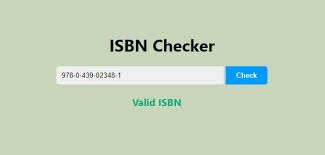
ISBN Validator – Check ISBN Numbers Online: Powerful 7 Ways to Verify Book ISBNs
ISBN Validator is a useful online tool that helps users check ISBN numbers for accuracy, validity, and correct formatting. Whether you’re a reader, bookseller, publisher, librarian, researcher, or student, an ISBN validator can make it easier to identify mistakes in ISBN-10 and ISBN-13 numbers.
International Standard Book Numbers are used to identify specific book editions and formats. However, a single incorrect digit can make an ISBN invalid. With an ISBN Validator, you can quickly check an ISBN number online without performing complicated calculations manually.
This guide explains what an ISBN is, how ISBN validation works, why checking ISBNs matters, and seven practical ways an ISBN checker can help with books, catalogs, publishing, libraries, and online research.
What Is an ISBN Validator?
An ISBN Validator is an online tool designed to determine whether an ISBN number follows the required validation rules. It can check ISBN-10 and ISBN-13 values and identify whether the number has a valid check digit and structure.
ISBN stands for International Standard Book Number. It provides a unique identifier for a particular book edition or format. For example, the hardcover, paperback, and ebook editions of the same title can have different ISBNs.
When entering an ISBN manually, it’s easy to mistype one or more digits. An ISBN validator helps detect these mistakes quickly.
Most online validators work by accepting an ISBN as input and analyzing its digits. The tool can remove unnecessary spaces or hyphens, determine the ISBN format, calculate the check digit, and report whether the number is mathematically valid.
Why Is ISBN Validation Useful?
ISBN validation is useful because book identifiers appear in many places, including:
- Online bookstores
- Library catalogs
- Publishing databases
- Book inventories
- Academic references
- Bibliographies
- Retail product listings
- Book collecting databases
- E-commerce websites
- Research projects
A correct ISBN makes it easier to distinguish one edition from another.
ISBN Validation Is Not the Same as Book Verification
An important point is that an ISBN can be mathematically valid without necessarily representing a real or currently published book.
An ISBN validator generally checks whether the number follows the ISBN structure and check-digit rules. An ISBN lookup service may go further by searching databases for information about the book.
Therefore, validation answers:
“Does this ISBN have a valid structure and check digit?”
A lookup answers:
“What book is associated with this ISBN?”
Both functions can be useful, but they serve different purposes.
What Is an ISBN Number?
An ISBN is a standardized identifier assigned to books and certain other published materials. It helps publishers, retailers, libraries, distributors, and readers distinguish individual editions and formats.
The modern ISBN system primarily uses ISBN-13 numbers.
An ISBN-13 contains 13 digits and is generally displayed in groups separated by hyphens. The groups represent different parts of the identifier, including the ISBN prefix, registration group, registrant, publication, and check digit.
For example, an ISBN may appear in a format such as:
978-1-2345-6789-7
The exact grouping can vary depending on the ISBN.
ISBN-10
ISBN-10 was the older 10-digit ISBN format. It was widely used before ISBN-13 became the standard.
An ISBN-10 contains:
- 9 identifying digits
- 1 check digit
The final check digit may be a number from 0 through 9 or the letter X.
ISBN-13
ISBN-13 contains:
- 12 identifying digits
- 1 check digit
The final digit is calculated using a specific weighted formula.
ISBN-13 is now the standard format used for newly assigned ISBNs.
ISBN-10 vs. ISBN-13
Understanding the difference between ISBN-10 and ISBN-13 makes validation easier.
| Feature | ISBN-10 | ISBN-13 |
|---|---|---|
| Total digits | 10 | 13 |
| Current standard | Older format | Current standard |
| Check digit | 0–9 or X | 0–9 |
| Common use | Older books | Modern publications |
| Validation | Weighted calculation | Modulo-10 calculation |
| Prefix | No 978/979 prefix | Uses 978 or 979 prefixes |
An online ISBN Validator can automatically recognize which format you’re checking.
Can ISBN-10 Be Converted to ISBN-13?
Many ISBN-10 numbers can be converted into corresponding ISBN-13 numbers by using the appropriate 978 prefix and recalculating the check digit.
However, conversion should be performed carefully. The original ISBN-10 check digit isn’t simply copied into the ISBN-13 version.
For large catalogs, an ISBN conversion and validation tool can reduce manual errors.
How Does ISBN Validation Work?
ISBN validation relies on mathematical rules. These rules are designed to detect common data-entry errors.
For ISBN-13, the first 12 digits are used to calculate the final check digit. The digits are assigned alternating weights of 1 and 3.
The general process is:
- Remove spaces and hyphens.
- Confirm that the ISBN contains 13 digits.
- Check that the prefix is appropriate.
- Multiply digits using the required weights.
- Add the resulting values.
- Calculate the expected check digit.
- Compare it with the final digit.
- Return the validation result.
For example, if the first 12 digits produce a calculated check digit of 7, the complete ISBN must end with 7 to pass the mathematical validation.
Why Does the Check Digit Matter?
The check digit acts as a basic error-detection mechanism.
Suppose someone accidentally enters:
9781234567897
instead of:
9781234567890
The ISBN validator can calculate the expected check digit and determine whether the entered number matches the required value.
This makes ISBN validation especially useful when working with large lists of books.
ISBN Check Digit Explained
The check digit is one of the most important parts of an ISBN.
It helps detect errors caused by:
- Typing the wrong digit
- Leaving out a digit
- Entering an extra digit
- Transposing certain digits
- Copying an ISBN incorrectly
ISBN-13 Check Digit
For an ISBN-13, the first 12 digits are processed using alternating weights of 1 and 3.
The calculation can be represented as:
Sum = digit1 × 1 + digit2 × 3 + digit3 × 1 + ...
After calculating the weighted sum, the check digit is determined using modulo 10.
The purpose isn’t to identify the book itself. Instead, it confirms whether the number satisfies the ISBN mathematical structure.
ISBN-10 Check Digit
ISBN-10 uses a different weighted calculation. Its final character can be X, which represents the value 10.
This is one reason why an ISBN-10 validator needs different validation logic from an ISBN-13 validator.
Why Validate ISBN Numbers?
There are many reasons to check ISBN numbers before using them.
Prevent Cataloging Errors
Libraries and booksellers may maintain thousands or millions of records. One incorrect digit can lead to an inaccurate catalog entry.
Improve Product Listings
Online sellers rely on accurate identifiers when creating book listings. Validating the ISBN before publishing a listing can reduce data-entry problems.
Support Academic Research
Students and researchers often use ISBNs to identify books and editions. A validation check can help confirm that the number was entered correctly.
Reduce Duplicate Records
A clean ISBN database can help organizations distinguish between editions and avoid unnecessary duplicate entries.
Save Time
Manual ISBN calculations are possible, but an online validator can complete the process in seconds.
7 Powerful Ways to Use an ISBN Validator
An ISBN Validator can be useful in many real-world workflows. Here are seven practical applications.
1. Check Book ISBNs Before Buying
Before purchasing a specific edition, you can check its ISBN to make sure the number is structurally valid.
This is particularly helpful when buying used books online, where listing information may have been entered manually.
A valid ISBN doesn’t guarantee that the seller has described the book correctly, but it provides an additional data-quality check.
2. Verify ISBNs in Book Catalogs
Libraries, bookstores, and collectors often maintain large catalogs.
A single typo can create problems when searching for a book or matching records.
Using an ISBN validator before importing or updating records can help catch incorrect values.
3. Validate ISBNs for Online Bookstores
E-commerce sellers can use ISBN validation when adding books to an online inventory.
Before publishing a product page, sellers can check:
- ISBN format
- Number of digits
- Check digit
- ISBN type
- Formatting
This can make product data more consistent.
4. Check ISBNs in Academic References
Students frequently include books in essays, research papers, and bibliographies.
When an ISBN is included as part of a research record, validating it can help prevent simple transcription mistakes.
This is particularly helpful when ISBNs are copied from scanned documents or handwritten notes.
5. Clean a Book Database
Organizations may have old databases containing thousands of ISBN entries.
An ISBN validator can be used as part of a data-cleaning process to identify:
- Invalid ISBNs
- Incorrect lengths
- Formatting inconsistencies
- Invalid check digits
- Potential data-entry errors
This can make later searches and imports more reliable.
6. Validate ISBNs During Publishing Workflows
Publishers and authors may work with ISBNs across different systems.
Validation can be added to a workflow before ISBN information is entered into:
- Metadata systems
- Publishing platforms
- Inventory software
- Distribution systems
- E-commerce databases
This reduces the chance of passing incorrect ISBN data to another system.
7. Build ISBN-Based Applications
Developers can integrate ISBN validation into software applications.
For example, a book management application could automatically check ISBNs when users add a new book.
A validation system might return information such as:
| Result | Meaning |
|---|---|
| Valid ISBN-13 | Number passes ISBN-13 validation |
| Valid ISBN-10 | Number passes ISBN-10 validation |
| Invalid check digit | Final digit doesn’t match |
| Invalid length | Number doesn’t contain the required digits |
| Invalid characters | Input contains unsupported characters |
Validate ISBNs for Book Research
Book researchers often work with information from different sources.
An ISBN can provide a useful identifier when comparing records from bookstores, libraries, publisher catalogs, and other databases.
For example, imagine you’re researching a textbook that appears in several databases. The title may be slightly different in each source, but the ISBN can help determine whether the records refer to the same edition.
ISBNs and Different Editions
Different formats can have different ISBNs.
A book may have separate identifiers for:
- Hardcover
- Paperback
- Large print
- Ebook
- Audiobook
- Revised edition
- International edition
Therefore, validating the ISBN is only the first step. You should also confirm that the ISBN corresponds to the edition you need.
Check ISBNs for Online Bookstores
Online bookstores depend heavily on structured product data.
An ISBN can help identify a book within an inventory system, but incorrect numbers can cause matching problems.
For sellers, a simple validation workflow might look like this:
Enter ISBN → Normalize formatting → Validate → Check book metadata → Add to inventory
This process helps separate data validation from product identification.
Why E-Commerce Sellers Should Validate ISBNs
Accurate identifiers can help with:
- Product matching
- Inventory management
- Catalog organization
- Listing creation
- Customer support
- Order processing
- Book edition identification
An ISBN validator is therefore a useful quality-control tool for online book sellers.
Validate ISBNs for Libraries
Libraries use identifiers extensively to organize collections.
A library record can contain extensive metadata, including:
- Title
- Author
- Publisher
- Publication date
- Edition
- ISBN
- Subject information
- Classification data
If the ISBN is incorrect, matching a record against another catalog can become more difficult.
ISBN Validation in Library Data
Libraries may receive book information from different sources. Validating ISBN values before importing records can help improve data quality.
For large datasets, automated validation is usually more practical than manually checking each ISBN.
ISBNs in Publishing and Cataloging
Publishers assign ISBNs to eligible publications and formats. These identifiers become part of the book’s metadata.
A publishing workflow may involve several stages:
- Publication planning
- ISBN assignment
- Metadata creation
- Edition preparation
- Distribution
- Retail listing
- Library cataloging
An ISBN validator can be useful whenever ISBN data is entered, transferred, or imported.
ISBN Metadata Quality
Good metadata improves discoverability and reduces confusion.
An accurate ISBN should be paired with accurate information about:
- Book title
- Author
- Format
- Edition
- Publisher
- Publication date
- Language
Validation can’t confirm every metadata field, but it can confirm whether the ISBN itself passes its structural rules.
Common ISBN Validation Errors
Even when an ISBN looks correct, it may contain a subtle error.
Here are some common issues.
Wrong Number of Digits
ISBN-10 should contain 10 characters after normalization, while ISBN-13 should contain 13 digits.
Entering a shorter or longer value can cause validation to fail.
Incorrect Check Digit
A common error is changing one digit near the end of the ISBN.
The validator calculates the expected check digit and compares it with the supplied one.
Extra Spaces
ISBNs are often printed with spaces or hyphens. A good validator should normalize these characters before performing validation.
Incorrect Hyphenation
Hyphenation varies among ISBNs. Incorrect visual grouping doesn’t necessarily mean that the underlying digits are invalid.
For validation purposes, the important value is the normalized sequence of ISBN characters.
Mixing ISBN-10 and ISBN-13 Rules
An ISBN-10 shouldn’t be validated using the ISBN-13 formula.
A reliable validator first determines which ISBN format is being used.
ISBN Validator vs. ISBN Lookup
These two tools are often confused.
| Feature | ISBN Validator | ISBN Lookup |
|---|---|---|
| Checks number structure | Yes | Sometimes |
| Checks check digit | Yes | Sometimes |
| Identifies book | Not necessarily | Yes |
| Returns title | Usually no | Usually yes |
| Returns author | Usually no | Usually yes |
| Requires database | Not necessarily | Usually |
| Main purpose | Validate | Identify |
An ISBN Validator focuses on the number itself.
An ISBN lookup focuses on the book associated with the number.
Some online tools combine both features, allowing users to validate an ISBN and then retrieve book information.
How to Check an ISBN Online
Checking an ISBN online is usually straightforward.
Step 1: Find the ISBN
Locate the ISBN on the book’s copyright page, back cover, barcode area, product listing, or catalog record.
Step 2: Open an ISBN Validator
Use an online ISBN checking tool.
Step 3: Enter the Number
Paste or type the ISBN into the input field.
Hyphens and spaces can generally be removed or normalized automatically.
Step 4: Run the Validation
Click the validation button.
The tool should analyze the number and return a result.
Step 5: Review the Result
A successful validation means that the ISBN follows the mathematical rules for its format.
If the number fails, check whether you entered every digit correctly.
Step 6: Use a Lookup if Necessary
If you need the book title, author, publisher, or edition, use an ISBN lookup database after validating the number.
ISBN Validation Best Practices
Following a few simple practices can make ISBN management more reliable.
Normalize ISBN Data
Remove unnecessary spaces and formatting characters before storing ISBNs.
Preserve Leading Digits
Don’t treat an ISBN as an ordinary number in software systems that may remove leading zeros.
An ISBN should generally be stored as text.
Keep ISBN-10 and ISBN-13 Distinct
Record which format you’re using when maintaining a database.
Validate Before Importing
If you’re importing a large book list, validate ISBN values before adding them to the main database.
Confirm Book Metadata
Validation only confirms the ISBN’s structural correctness. It doesn’t prove that the ISBN belongs to a particular title or edition.
Don’t Rely on Validation Alone
For professional cataloging, combine validation with authoritative metadata sources.
ISBNs and Book Metadata
ISBNs work as identifiers, but they are only one part of book metadata.
A complete book record might include:
- ISBN
- Title
- Subtitle
- Author
- Publisher
- Publication date
- Edition
- Format
- Language
- Page count
- Description
- Cover image
The ISBN helps connect these pieces of information to a specific publication or edition.
ISBN and Barcode
Many physical books display an ISBN as part of an EAN-13 barcode.
The barcode allows retail and inventory systems to scan the identifier electronically.
However, visually reading a barcode or ISBN doesn’t automatically confirm that the underlying value is correct. Validation provides an additional check.
Using ISBN Validation for Data Quality
ISBN validation can become part of a broader data-quality process.
For example, a book database could use the following workflow:
Import → Normalize → Validate → Detect duplicates → Match metadata → Store
This approach is useful for:
- Libraries
- Publishers
- Bookstores
- Resellers
- Researchers
- Book collectors
- Inventory systems
Automated Validation
If you manage thousands of records, manually checking each ISBN isn’t practical.
Software can validate ISBNs automatically as records are imported or updated.
This reduces repetitive work and allows invalid records to be flagged for review.
ISBN Validation for Developers
Developers building book-related applications can add ISBN validation to forms and databases.
For example, a registration form might require users to enter an ISBN before creating a book record.
The application could:
- Remove spaces and hyphens.
- Detect ISBN length.
- Identify ISBN-10 or ISBN-13.
- Calculate the check digit.
- Compare the result.
- Return an error if validation fails.
- Store the normalized ISBN.
This creates a better experience for users and improves database quality.
ISBN Input Validation
A user-friendly ISBN field should accept common formats.
For example, users may enter:
978-0-1234-5678-9
or:
9780123456789
The application can normalize both values before checking them.
Benefits of an Online ISBN Validator
An online validator offers several practical advantages.
Fast Results
You can check an ISBN within seconds.
No Manual Calculation
The tool performs the mathematical validation automatically.
Easy Formatting
Many validators accept ISBNs with spaces and hyphens.
Useful for Beginners
You don’t need to understand ISBN formulas to perform a basic check.
Helpful for Large Projects
Validators can support workflows involving many book records.
Better Data Accuracy
Checking identifiers before storing or publishing them can reduce avoidable errors.
Frequently Asked Questions About ISBN Validators
What is an ISBN Validator?
An ISBN Validator is a tool that checks whether an ISBN-10 or ISBN-13 number follows the required format and has a valid check digit.
How do I check an ISBN number online?
Enter the ISBN into an online ISBN validation tool and run the check. The tool calculates the required check digit and determines whether the number is mathematically valid.
Can an ISBN validator check ISBN-10?
Yes. A properly designed ISBN Validator can check ISBN-10 numbers using the ISBN-10 validation formula.
Can an ISBN validator check ISBN-13?
Yes. ISBN-13 validation uses a weighted calculation involving the first 12 digits and a final check digit.
What does an invalid ISBN mean?
An invalid ISBN usually means the number doesn’t satisfy the required structural or check-digit rules. It may contain a typing error, missing digit, extra digit, or incorrect check digit.
Does a valid ISBN mean the book exists?
Not necessarily. A valid ISBN means the number passes the ISBN validation rules. To determine whether a specific book is associated with that ISBN, you need an ISBN lookup or authoritative book database.
Can I remove hyphens from an ISBN?
Yes. Hyphens are formatting characters. The underlying ISBN digits can generally be normalized without them.
What is the difference between ISBN-10 and ISBN-13?
ISBN-10 contains 10 characters, while ISBN-13 contains 13 digits. They also use different check-digit calculations.
Can an ISBN-10 be converted to ISBN-13?
Many ISBN-10 values can be converted to ISBN-13 by using the appropriate ISBN-13 prefix and calculating a new check digit.
Why does ISBN-10 sometimes end with X?
In ISBN-10, the letter X represents the value 10 and can be used as the check digit.
Can I use an ISBN validator for a book barcode?
If you can extract the ISBN from the barcode, you can validate the ISBN. A barcode itself is a machine-readable representation and isn’t the same thing as an ISBN validation result.
Is ISBN validation useful for online sellers?
Yes. Sellers can use validation to reduce errors when entering book identifiers into product listings, inventory systems, and catalogs.
Conclusion
An ISBN Validator is a simple but valuable tool for checking ISBN numbers online. Whether you’re a student researching books, a librarian maintaining a catalog, a publisher managing metadata, or a seller creating product listings, ISBN validation can help identify common data-entry mistakes.
The key benefit is speed. Instead of manually calculating check digits, you can enter an ISBN and quickly determine whether it follows the correct validation rules.
Remember that validation and identification are different. A valid ISBN doesn’t automatically confirm the title, author, edition, or existence of a particular book. For complete verification, combine an ISBN validator with a reliable book metadata or ISBN lookup service.
When used as part of a broader data-quality workflow, ISBN validation can make book records cleaner, more consistent, and easier to manage.
If you’re working with ISBN-10 or ISBN-13 numbers, an online ISBN Validator is an easy way to check your data before using it in a catalog, research project, bookstore listing, or publishing workflow.